Saturday, April 28, 2012

Lay Down

We know love by this, that He laid down His life for us—and we ought to lay down our lives for one another. How does God’s love abide in anyone who has the world’s goods and sees a brother or sister in need and yet refuses to help? (1 John 3.16-17)

Hard-Edged Realism

Sunday’s texts feature two beloved passages: Psalm 23 (“The Lord is my shepherd”), along with John 10.11-18 (“I am the Good Shepherd”). And it fascinates me that the shepherd metaphor continues to resonate all these centuries later, even though very few of us have any real experience with sheep. The closest I’ve ever got to one is at a petting zoo and, frankly, I don’t recall much of what that was like, as sheep are by nature rather dull. They’re docile and, from what I’ve read of them, dim-witted. They rely entirely on their keepers for survival. They exhibit no knack for finding pasture on their own—no sense of direction—and the herd mentality that holds other grazing animals together isn’t evident in them. Without a shepherd to guide and corral them, sheep are as good as dead. So it mystifies me that we romanticize poems and parables that cast us as clueless, vulnerable livestock wholly dependent on our Keeper.

Even for those of us with first-hand experience tending sheep, what we know bears little resemblance to what David and Jesus speak of. In ancient times, shepherding is a nomadic trade. Flocks travel wherever the shepherd goes. There are no farms, barns, and fenced pastures. After settling in a meadowland, the shepherd fashions a makeshift pen to ward off predators and prevent the lambs from wandering off in the night. In place of a gate, the shepherd lays down in the enclosure’s opening, as the first line of defense to shield the flock from harm. By filling the gap, the shepherd not only denies easy access for predatory attacks and keeps the sheep from going astray; he safeguards the fold from marauding bandits. Willingness to sacrifice personal comfort and safety for the sheep’s sake is the mark of a good shepherd, as Jesus explains in John 10.11: “The good shepherd lays down his life for the sheep.” In turn, the sheep’s trust in him is what David describes in Psalm 23.4: “Even though I walk through the darkest valley, I fear no evil; for You are with me.” Laying down his life is the key to the good shepherd metaphor. It introduces an element of danger that gives the poetry hard-edged realism. Harsh truth slices through the pastoral mist.

The Loving Thing

The good shepherd risks his life for his sheep because they are his livelihood. The keeper-flock relationship is symbiotic, driven as much, if not more, by pragmatism as by mutual affection. Sheep can’t live without their shepherd; a shepherd can’t live without his sheep. There’s a primal bond between them that defines their roles and secures their wellbeing. And this serves as the foundation when 1 John 3 invokes the shepherd metaphor, saying, “We know love by this, that He laid down His life for us.” What John does next is very interesting. He places us in the shepherd’s position. “And we ought to lay down our lives for one another. How does God’s love abide in anyone who has the world’s goods and sees a brother or sister in need and yet refuses to help?” (v16-17)

Let’s try to unpack this. John begins by highlighting our Shepherd’s love. Christ’s sacrificial death becomes the paradigm of compassion, echoing Jesus’s definition of supreme love in John 15.13: “No one has greater love than this, to lay down one’s life for one’s friends.” Because we’ve been blessed to know the greatest of all loves, John says we ought to lay down our lives for others. It’s the loving thing to do—to provide for and protect those who travel beside us, to do everything we can, risking our very lives if need be to safeguard them from predators, thieves, and going astray. What’s more, John ups the ante, calling us to go all in. As recipients of God’s great, unconditional love, we can only witness it by loving extravagantly and selflessly. And here is where John flips the switch, turning our attention from the metaphor’s romance to recognize its pragmatic principle. Willingness to lay down our lives guarantees that those in need won’t go without. God’s love in us opens the way; God’s goodness to us provides the means. John constrains us to emulate our Good Shepherd and then ingeniously simplifies laying down one’s life into a two-question sequence. What do they need, and what have we to give? If only it were as simple as he makes it sound.

How Can We?

In John’s era, material poverty was a major concern. For a large portion of society, depending on kindness was the best hope of survival. Tragically, millions today are in no better stead. Yet for the vast majority of us, the poverty crisis plays out on emotional, moral, and spiritual planes. In obtaining more worldly goods than any generation before, many surrender more of themselves than their ancestors could possibly imagine. While people and things they value engulf them, they’re hollow inside. They feel miserably alone and undervalued. Though pride blinds them from seeing it, they’re in dire need of help. Their lives are riddled with gaps. They’re vulnerable to predators who prey on their emotions, thieves who rob them of moral integrity, and dim-wittedness that causes them to wander into the night. They need someone to lay down their lives for them, and we have it in us to do that.

We’ve been drawn into a symbiotic relationship—not only as sheep belonging to the Good Shepherd, but also as good shepherds given responsibility for other sheep. The conviction in John’s question—“Can we see people in need and refuse to help?”—should ring in the depths of our beings. Can we see lives at risk and not risk our all for them? Can we ignore huge gaps that need to be filled? Can we pull away and rest easy while others remain easy prey for predators, thieves, and misguided impulses? The unequaled love abiding in us would say, “No, you can’t. You must lay down your life.”
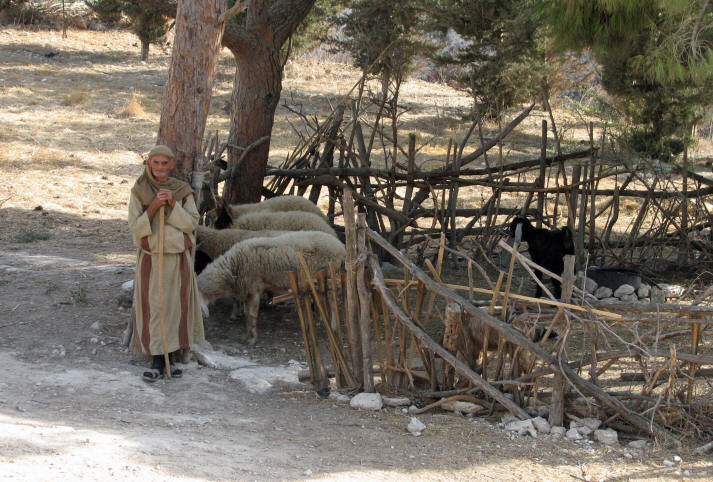

Because of the Good Shepherd’s love for us, we too become good shepherds willing to lay down our lives for endangered sheep around us.


Friday, April 27, 2012

Regression Lesson

When Jesus saw this, He was indignant and said to them, “Let the little children come to Me; for it is to such as these that the kingdom of God belongs.” (Mark 10.14)

Alive and Aware

Alison Gopnik is an Oxford-trained psychologist, philosopher, and self-avowed materialist—meaning she subscribes to “the theory that physical matter is the only reality and that everything, including thought, feeling, mind, and will, can be explained in terms of matter and physical phenomena” (American Heritage Dictionary). Although we risk over-simplifying both her psychological research and philosophy of life, it’s not inaccurate to say Dr. Gopnik views the more ephemeral aspects of faith—its transcendence, the sense of God’s presence in our lives, the need to reconcile one’s being with divine will, and so on—with a healthy dose of skepticism. Yet her findings nonetheless open to us a profoundly moving window that can illuminate how we approach faith.

Dr. Gopnik’s primary field of study focuses on child learning and development. And what she’s discovered is riveting. Immediately upon entering the world, infants and youngsters exist in a perpetual state of newness and wonder. Every moment is like “first love in Paris,” she says. “Every step is sky-diving; every game of peek-a-boo is like discovering Einstein’s theory.” Brain scans of babies and toddlers reveal constant incandescence, as their neurons blaze with curiosity and eagerness to apprehend the world around them. In contrast, adult scans evidence long stretches during which thought and perception register nothing new. As we age, it appears we increasingly lapse into autopilot, leading Dr. Gopnik to suggest grown-ups spend large portions of their waking lives in a state of relative unconsciousness. It turns out our assumption that little ones are oblivious to life’s joys and challenges couldn’t be more wrong. Our children are supremely alive and aware.

Such as These

In Mark 10, people bring their children to Jesus, asking Him to bless them. The disciples reproach them, just as we would expect, since youngsters in ancient times are discounted as society’s least. They have nothing to contribute—no wisdom or experience, no means of productivity, and no way to help ensure a family’s stability. Indeed, they’re seen as liabilities. They may be loved. They may not. Either way, they're not worth much to anyone until they reach adolescence. And in the hardscrabble daily existence of first-century Palestine, survival is hardly a given. So while we bristle at the disciples’ dismissal, they neither mean no harm nor are they out of line. If anything, they’re showing Jesus respect as an eminent Rabbi. Which is why He surprises them by welcoming the very young.

And we should be highly cognizant of what’s going here; because there’s more to it than the “Jesus-loves-the-little-children-of-the-world” photo op that many paint it to be. This is not a campaign stop, with Jesus kissing babies and patting tykes on the head. It’s not a polite gesture meant to flatter their parents. Jesus turns the situation into a teaching moment to say something vital about us. Read His response carefully: “Let the little children come to Me; for it is to such as these that the kingdom of God belongs.” (v14) The kingdom of God belongs to childlike believers. Jesus is so emphatic about the required state of mind of “such as these” that He spells it out in the next verse: “Truly I tell you, whoever does not receive the kingdom of God as a little child will never enter it.” Now we can settle for the broad strokes of His message to us, saying, “Yeah, yeah, we get it: we should be humble, innocent, trusting, etc.” But Dr. Gopnik might encourage us to reconsider. In light of her research, when Jesus instructs us to approach faith in a childlike fashion, He’s telling us to become alive to everything around us—to remove the scales from our eyes, unstop our ears, unblock our emotions, and enter God’s kingdom as if we’re discovering the world God has given us for the first time. In essence, Jesus turns a socially unpleasant situation into a regression lesson.

Natives of God’s Kingdom

The power of newness is not news. It resounds throughout Scripture, starting with the Creation and continuing throughout Jesus and the Apostles’ linkage of faith with re-Creation. Numerous times we hear God speak through psalmists and prophets, saying, “I’m doing something new!” Jesus defines a faith-led life as new birth. In 2 Corinthians 5.17 we find Paul’s famous proclamation, “If anyone is in Christ, there is a new creation; everything old has passed away; see, everything has become new!” And since these words are spoken to us, we’re apt to apply them only to us. But I think we miss a huge part of the message by not expanding its principle to the world at large. Re-Creation invites us to respond anew to the world and people around us—to allow the film of old ideas and perceptions to dissolve so that we may reenter our lives with fresh insights and curiosities. Foregone conclusions are gone. Prejudices and presumptions are preempted. Jaded attitudes and reactions lose their luster.

We are, first and foremost, natives of God’s kingdom, born with a glorious aptitude for grace that enables us to wonder at all we encounter, never pausing to get hung up about where it comes from. For children, beauty is beautiful. Joy is joyous. Meanness is mean. Sadness is sad. They don’t linger to attribute their wonder to others’ largesse or cruelty. They don’t shape their world to meet expectations. And they most certainly don’t take the burden of its hardships upon themselves. That’s why children are so extraordinarily resilient. Their incandescence happens within, as they light up by viewing every experience as something altogether new. Dr. Gopnik says while we work our way through life, children create their lives with play and openness to what they’re given. The kingdom of God belongs to such as these, Jesus says. Regressing is an act of faith that releases new, re-creative faith.
As children of God’s kingdom, we view the world through wide-eyed wonder.


Podcast link: http://straightfriendly.podbean.com/2012/04/27/regression-lesson/

Saturday, April 21, 2012

What We Are

See what love the Father has given us, that we should be called children of God; and that is what we are. (1 John 3.1)
Immersive

Scripture can sometimes provoke a stray thought of such force that we hurry to put it away—not aside, but as far from us as we can send it, because it shows us something that changes how we see everything. Sunday’s New Testament reading, 1 John 3.1-7, triggered one of these thoughts. The shock came in the first three verses: “See what love the Father has given us, that we should be called children of God; and that is what we are. Beloved, we are God’s children now; what we will be has not yet been revealed. What we do know is this: when He [Jesus Christ] is revealed, we will be like Him, for we will see Him as He is. And all who have this hope in Him purify themselves, just as He is pure.”

It’s obvious John isn’t writing to Sunday Christians—religious hangers-on and casual traditionalists. He’s speaking to people who’ve undergone total transformation, believers who’ve allowed faith in Christ to redefine their entire existence. They’ve experienced baptism in its truest sense, not only as a symbolic rite that identifies them as Jesus’s followers, but in a spiritually immersive manner that saturates their very lives. Their encounter with God’s love made manifest in Christ leads them to call themselves “children of God,” which they believe themselves to be—even though they’re not sure what it all means.

The lifestyle John describes is, in every way, unnatural. It’s a life founded on familial ties and resemblance to the Creator, a life unhampered by biological inevitabilities, worldly success drives, and survival mandates. Ageing, illness, security, death, and every other concern that naturally points to a hard stop are merely commas and semicolons to John’s readers. Something beyond present life calls to them—the hope in a day when the life they’re given and life they choose will come together and the truth of their faith-lighted existence will be irrevocably self-evident. As I pondered the ferocity of such faith, I wondered what it would look like today. The answer hit me with such a blow I may never recover.

Above the Mundane

Were we to live out John’s unnatural lifestyle to the fullest, many (probably most) would think we joined a cult. We’d been seen as radical extremists besotted by a starry-eyed Dreamer. If that were so, the modern version of Holy Week events we just revisited would be cast in inflammatory headlines: 

CULT STAGES PARADE IN JERUSALEM
CULT LEADER SMASHES UP TEMPLE 
ALLEGED “CHRIST” SEIZED
DEATH SENTENCE FOR HEAD OF CULT
CORPSE OF CULT LEADER MISSING—FOLLOWERS CLAIM HE’S ALIVE 

Somewhere in the flurry of the weeklong news cycle, cult “experts” would connect the dots: “Hardcore disciples of Jesus distance themselves from ordinary life by identifying as ‘children of God.’ They say God’s love for them is so great it literally alters them. They invest all their hope in their Leader’s supposed ability to release them from fear and death. So while their reality testing is very low, their faith in Christ’s promises lifts them above the mundane. And that’s why they’re dangerous.”

Because of God’s love, we can confidently say we’re God’s children. But John won’t leave it there. “And that’s what we are,” he stresses, adding that the reason why others don’t recognize us as children of God is because they don’t know Christ. Thus, being viewed as “different”—whether favorably or not—is in itself confirmation of the transformative power of God’s unconditional love; it is the sign that we do, in fact, belong to God. And we should own everything that’s different about us with the same intensity we observe in cult members who subscribe to the most outlandish philosophies and ideas imaginable. Nothing ever hatched by human minds can possibly compare to the outrageous truth of Christ’s gospel. No human cult leader has, or ever will, equal Jesus’s audacity to preach selfless love of God and others. No ordinary man or woman has, or ever will, promise new life and dare to do as Jesus did: demonstrably make good on the promise. Our faith not only secures our identity as children of God. It lifts us above the mundane and makes us dangerous.

Life Now Lived in God

Belief in Jesus testifies to blatant defiance of conventional wisdom and natural order. Jesus explicitly says this in Sunday’s Gospel (Luke 24.36-48): “’These are My words that I spoke to you while I was still with you—that everything written about Me in the law of Moses, the prophets, and the psalms must be fulfilled.’ Then He opened their minds to understand the Scriptures, and He said to them, ‘Thus it is written, that the Messiah is to suffer and to rise from the dead on the third day, and that repentance and forgiveness of sins is to be proclaimed in His name to all nations, beginning from Jerusalem. You are witnesses of these things.’” (v44-48; emphasis added)

What we witness in Jesus is what we hope for in us—the revelation of something bigger, richer, and purer than anything found in this world’s ways: the fulfillment of divine promise. Greater love. Truer honesty. Higher justice. Deeper commitment. Freer forgiveness. Wider acceptance. Eternal life that surpasses life hereafter to become life now lived in God, given by God, understood and pursued as a reflection of God. We witness all of this in Jesus, the perfect Child, and we follow His example as children of God. That’s why we’re dangerous. Living as God’s children, we devote our lives to hope that constantly pushes us over the line, that ignores manmade boundaries and definitions, that abides by principles and customs of what the Hebrews writer called “a building not made by hands.” (11.9)

We inhabit a divine state of becoming, of steadily growing into our resemblance to Christ. In 1 John 3.7 we read, “Little children, let no one deceive you. Everyone who does what is right is righteous, just as He is righteous.” We do what’s right because we’ve witnessed what’s right in Jesus. It’s what we do, regardless how others may view us, what they may say about us, and whether or not they ever acknowledge, accept, or believe us. What love God has given us that we should be called God’s children. If ever a scripture cried for an exclamation point, this one does. That we should be called God’s children!

And that’s what we are!

 Faith in Christ’s promises lifts us above the mundane.

Wednesday, April 18, 2012

Mere Mortals

Hear Me, you who know what is right, you people who have taken My instructions to heart: Do not fear the reproach of mere mortals or be terrified by their insults. (Isaiah 51.7; NIV)

Self-Elimination and Zombie Faith

I’ve not yet seen Bully, the documentary prompting a lot of conversation about this crisis among our youth. But in the trailer, one parent says, “Be the difference. Go out and find that one child, that new kid standing over there by himself. Be willing to stand up for him.” And while the urgency of aligning ourselves with—and protecting—children who are abused as outsiders has never been greater, the comment brought to mind how many adults also suffer from bullying.

As creatures we’re no different than other social species; we fall into a pecking order that establishes who among us has the upper hand and who’s expendable. It’s a pack mentality one can arguably explain as part of our DNA—the jungle law that spurs alpha types on our playgrounds to intimidate classmates who don’t fit the accepted mold. Not surprisingly, we’re seeing the call of the wild play out among our children much like it does in nature. With increasing regularity, kids labeled as worthless misfits withdraw into debilitating depression and, in the most extreme cases, eliminate themselves by suicide. Yet we don’t seem capable of outgrowing this phenomenon on our own. We see it in adults everywhere: in families, at work, in politics, in communities, and, most distressingly, in arenas of faith.

The whole point of faith, as I see it, is to correct our penchant for jungle law by transforming our natures to reflect God’s perfect love and acceptance. Faith is designed to defy nature, to reestablish a law of life that defeats fear and death. In Romans 7.5-6 we read, “While we were living in the flesh, our sinful passions, aroused by the law, were at work in our members to bear fruit for death. But now we are discharged from the law, dead to that which held us captive, so that we are slaves not under the old written code but in the new life of the Spirit.” So how is it, then, that the halls of Christianity are strewn with corpses of people who’ve been bullied as outsiders—precious souls who’ve been convinced that they’re worthless misfits? How can a faith that hangs on the promise of resurrection tolerate a culture that breeds debilitating depression and, in the most tragic cases, encourages self-elimination from the Body of Christ?

And we should be very frank about this. When those who’ve been rejected withdraw from the community of believers, they’re essentially committing faith suicide. Furthermore, while some may not go so far as turning away, to survive a climate governed by exclusion necessitates rejecting “new life in the Spirit.” Like bullied children, they’re held captive by powers that “bear fruit for death.” It’s not enough to call them the walking wounded. They’re viewed and treated—and thus perceive themselves—as the living dead. In being pushed aside and bullied for not fitting the mold, they’re consigned to a life of zombie faith, a hollow belief that yields no life-giving love, joy, and acceptance.

Perfect Gifts

As we ponder the despicable doctrines and practices that foster self-elimination and zombie faith, we listen closely to God’s voice in Isaiah 51.7: “Hear Me, you who know what is right, you people who have taken My instructions to heart: Do not fear the reproach of mere mortals or be terrified by their insults.” In context, God is addressing a bullied nation. His word comes to a people who’ve been overpowered and taken captive by Babylon—the top dog of their age. They’re forced to live as outsiders in a strange land, not by choice as expatriates, but without recourse as exiles. With no end in sight, no doubt many toy with suicidal thinking, while the rest attempt to endure by clinging to zombie faith. Yet God reminds them they know better. How it looks is not how it is. “You know what’s right,” God says. “You’ve taken My instructions to heart.” Knowledge of Who God is and what God expects is given to bolster them against jungle-law bullying. “Remember, bullies are mere mortals,” God says. They’re not to be feared.

In daily life—and, in particular, in the realm of faith—we have to know that. We cannot forget what is right, or lose sight of Who God is and what God expects. Our worthiness isn’t measured by pecking order and primal nature. It’s decreed by our Maker. James 1.17 tells us, “Every generous act of giving, with every perfect gift, is from above, coming down from the Father of lights, with Whom there is no variation or shadow due to change.” Created in the image of a perfect God, we are perfect gifts of lasting value and the only way we can alter that perfection is by rejecting it—by submitting to bullies who insist we are less than God made us to be. We must be very canny in our awareness that not everyone who reaches prominent positions in our churches has reached Paul’s understanding that the Body of Christ isn’t governed by laws of sin and death. Not everyone who says we’re wrong knows what’s right. Not everyone who preaches has taken God’s instruction to heart. God has opened this amazing opportunity for us to experience new life in the Spirit. We’ve been freed from captivity and fear. How it looks is not how it is. Self-elimination is not an option. Zombie faith is no way to live. We are perfect gifts.

Find Them

As we take this liberating message to heart, we open our hearts to those who’ve not heard it, or struggle to believe it. Within our families, workplaces, and communities—especially our faith communities—we know people who’ve been bullied into rejecting their self-worth. They battle self-eliminating urges of every imaginable type. They’re held captive by lies and libels that promote negative self-images bearing no likeness to their perfect Creator. They are afraid.

Yet, monumental though the forces convened against them may seem, it is in our power to do as the parent in Bully pleads: “Be the difference. Go out and find that one child, that new kid standing over there by himself. Be willing to stand up for him.” Find the believers who opt out of community. Convince them self-elimination is unnecessary. Find the believers who’ve settled for zombie faith. Show them love and speak words that restore their confidence that they too can experience new life in the Spirit. Find the believers who’ve lost sight of who they are because others have told them they’re not who they should be. Assure them that how it looks is not how it is. Find them. Be willing to stand up for them.

A very wise person said, “The things we fear the most have already happened to us.” And therein lies resurrection’s power over fear. It gives birth to newness of promise. It loosens the grip of past defeats and injuries so that we’re free to live as God wants us to. Whether on the playground or in the church, jungle law and the bullying it creates are the work of mere mortals. They’re nothing to fear. We have to believe that message for ourselves. And then we have to pass it along to others.


Bullying isn’t confined to the playground. Nor is it limited to children. It is equally prevalent in adult life, most corrosively in the realm of faith. We have power to change that.


Postscript: Bully

If you’ve not seen the Bully trailer, here it is. And as you view it, I would encourage you to think about adult bullying—Christian bullying—and how it demeans believers.

Sunday, April 15, 2012

Signs of Life


Now Jesus did many other signs in the presence of His disciples, which are not written in this book. But these are written so that you may come to believe that Jesus is the Messiah, the Son of God, and that through believing you may have life in His name. (John 20.30-31)

Under the Radar

The Resurrection hands Jesus’s followers a great big problem that gets even bigger 40 days later, when He vanishes into the heavens. They’re charged with spreading the Gospel—the Good News of God’s kingdom—and the disciples quickly discern that Jesus’s story is a major part of that larger story. For the Good News to stick, it needs to have been delivered by Divine Messenger, the Messiah, God Made Flesh. And the critical proof point that Jesus is God rests in the Resurrection. The disciples have no doubt that Jesus arose from the dead. They saw Him and spoke with Him after He left the tomb. Indeed, the main event in Sunday’s Gospel (John 20.19-31) explains how Jesus allowed Thomas to touch His transformed body to convince him that He’s alive. Yet it appears not many outside Jesus’s close-knit circle encounter Him as the Risen Christ. He appears to two unnamed disciples on the Emmaus Road. In 1 Corinthians 15, Paul asserts that Jesus was seen by a group of 500, although it isn’t reported in the Gospels. As far as we can tell, Jesus pretty much stays under the radar.

If we were among Jesus’s first disciples tasked with spreading the Good News, declaring His resurrection would be a tough row to hoe. We’d be hard-pressed to respond to comments and ridicule about Jesus’s whereabouts after leaving the tomb. “So where was He, what was He doing, if nobody but a handful of you saw Him? You’d think He’d make at least one token appearance at the Temple, just to set the record straight. This is a lot of baloney.” How would we answer that?

Fortunately, the disciples’ message is so compelling that many believe their word that Jesus arose from the dead. And that’s all the more amazing when we recall that Jesus leaves the world with nothing but His followers’ witness to substantiate He was ever here. First-generation believers have no grave, no relics, no writings, no children—no artifacts of any kind—they can point to as hard evidence Jesus even existed. Yet to this day, all but a very few question that He lived among us, teaching us how to live and presenting a principled Gospel that opens the door to a life in God. How can that be?

Thomas

John offers a fascinating clue when he closes Chapter 20 with this observation: “Now Jesus did many other signs in the presence of His disciples, which are not written in this book. But these are written so that you may come to believe that Jesus is the Messiah, the Son of God, and that through believing you may have life in His name.” (v30-31) Jesus leaves a legacy of signs that He was with us—signs that He stamps in the faith of His followers, who did see and speak with the Risen Christ. And the reason John singles out Thomas’s experience may very well be because it’s the most dramatic of the “many other signs” Jesus leaves.

Thomas, who misses Jesus’s first post-resurrection visit with the disciples, wants to be sure Jesus is alive. Although his insistence on touching Jesus’s wounds has labeled him a doubter, I’m not convinced Thomas questions the Resurrection as much as he distrusts his colleagues’ report. It’s only been 10 days since Jesus’s prediction of His death, resurrection, and ascension troubled Thomas. In John 14, during the Last Supper, Jesus frames what’s about to happen as a departure, return, and second departure. “I’m going away,” Jesus says, “but I’ll come back and show you how to go where I’m headed. And you know the way to the place where I’m going.” (v3-4) But Thomas isn’t content with Jesus’s hazy terminology. He speaks up: “Lord, we don’t know where You’re going. How can we know the way?” Jesus puts Thomas at ease, reassuring him, “I am the way.”

In light of this exchange, it makes perfect sense for Thomas to wait until He meets Christ for himself to believe Jesus is alive. He won’t be led down a garden path. He won’t risk the possibility the other disciples have mistaken someone else for Jesus. He requests a sign. When Jesus grants his request—revealing Himself to Thomas, as the Christ, the Way—something extraordinary transpires within the disciple. He believes. “My Lord and my God!” Thomas exclaims. (John 20.28) And in that exclamation an even greater thing occurs. Thomas’s faith transforms him into a sign of life. The Risen Christ becomes his reason to live.

A Belief So Strong

John says he records selected signs of Jesus’s resurrection so that we may come to believe that Jesus is “the Son of God, and that through believing you may have life in His name.” In a later letter, he revisits this idea when he writes, “This life was revealed, and we have seen it and testify to it, and declare to you the eternal life that was with the Father and was revealed to us—we declare to you what we have seen and heard so that you also may have fellowship with us.” (1 John 1.2-3) In both texts, John stresses our role in Jesus’s ongoing story. We are signs of life.

The absence of hard proof that Jesus arose from the dead—indeed, that Jesus ever existed—is our invitation to believe. Our faith must transcend hearsay evidence. It must grow out of a real encounter with Christ that allays all doubts about Him. It’s a belief so strong that it can’t be shaken, even as it shakes us to our core and causes us to exclaim, “My Lord and my God!” It’s the confidence one gospel songwriter condensed into the powerful declaration, “I know Him for myself.” That faith transforms us from reasonable doubters into triumphant signs of life. We become walking, talking evidence of Christ’s Resurrection—living witnesses to a life that conquers death in all of its forms.

In her Resurrection sermon last Sunday, our pastor quoted Clarence Jordan, an influential New Testament scholar whose words have stuck with me all week. He wrote: “The proof that God raised Jesus from the dead is not the empty tomb, but the full hearts of His transformed disciples. The crowning evidence that Jesus lives is not a vacant grave, but a Spirit-filled fellowship—not a rolled-away stone, but a carried-away Church.” Jesus left no paper trail, made no major post-Resurrection appearances, and vanished without a trace of His earthly existence because it was unnecessary. Instead, He left a self-perpetuating legacy of signs stamped in our faith. You are a sign. I am a sign. Everyone who believes is a sign. We are all signs of life.

 Jesus left no hard proof of His resurrection—indeed, no paper trail or artifacts at all to confirm His existence—because it was unnecessary. Proof that He lives is stamped in our faith. We are walking, talking signs of life.


Thursday, April 12, 2012

God Needs No Advice

When you are praying, do not heap up empty phrases as the Gentiles do; for they think that they will be heard because of their many words. Do not be like them, for your Father knows what you need before you ask Him. (Matthew 6.7-8)

As Crazy as Crazy Gets

In “People’s Parties,” her classic song about L.A. social life, Joni Mitchell describes the gallery of show-biz types at these affairs: “Some are friendly, some are cutting, some are watching it from the wings. Some are standing in the center, giving to get something.” We need never have been to a Beverly Hills get-together to picture what she describes. That’s the way every party goes—from weekend barbecues to wedding receptions. Indeed, that’s pretty much the way of community life in general. Whatever brings us together, each of us enters the occasion from a perspective that shapes our behavior once we’re there. Some of us come for friendship; we drop our guards to welcome people into our lives. Some of us hope to leave feeling better about who we are; so we spend our time comparing ourselves favorably to others. Some of us don’t want much of anything; we’re just there for the show. Still others of us take our position, “standing in the center, giving to get something.”

I’ve been thinking a lot about prayer lately, and it occurs to me that Mitchell may as well be describing various ways we approach our encounters with God. And it seems that, over the course of time, we assume all the roles in the song. Sometimes we use prayer to deepen our friendship with our Maker. Sometimes we turn visits with God into opportunities to criticize others, vent our cynicism, and complain about feeling underappreciated and unloved. Sometimes we don’t have much to say about anything; we’re just there to be there, “watching it from the wings.” Then there are times when we assume we’re the center of God’s universe. We plant ourselves in the middle of everything, believing it all revolves around us. That’s when the bargaining with God begins. “If You do this for me,” we pray, “I promise to do that for You.” What are we thinking? Seen objectively, our giving-to-get-something strategy is about as crazy as crazy gets. Yet we do it. We do it all the time.

Limiting God

Of course, the folly of bargaining with God is revealed in our presumption to know better than God what’s best for us. Our hubris to imagine we can advise God how to work on our behalf would be funny if it weren’t so pathetic. Any time we try to make a deal with God, we paint a broad stripe of desperation down the backs of our prayers. We confess we’ve placed all of our hope on a specific outcome, rather than in a God whose power and wisdom exceed comprehension. We essentially push God out of the picture, limiting God to what we believe must be done, rather than availing ourselves to what God wants to do—what God can do. Ephesians 3.20 says that when we put our expectations on hold and permit God’s power to work within us, God “is able to accomplish abundantly far more than all we can ask or imagine.” So why would we ever confine ourselves to reasoning and imagination when we pray? Why would we ever present our requests in terms of what we want, when God knows what we need? How could we possibly conceive God needs our advice? What causes us to think offering to do what God wants will persuade God to do what we want? How silly is that?

Just before giving us the perfect-prayer model—which pivots on the phrase, “Your kingdom come, your will be done, on earth as it is in heaven”—Jesus says, “When you are praying, do not heap up empty phrases as the Gentiles do; for they think that they will be heard because of their many words. Do not be like them, for your Father knows what you need before you ask Him.” (Matthew 6.7-8) Those “empty phrases” and “many words” He mentions are indicative of a prayer style common to all ancient peoples—a labored quid pro quo approach that views prayer as a contractual negotiation with divine powers. When the ancients prayed to their gods, they laid out elaborate pledges of loyalty, worship, and sacrifice in exchange for favor. Make it rain, and we’ll build you a beautiful temple. Help us conquer our enemies and we’ll force them to worship you. Give us lots of children and we’ll place a shrine to you in our homes. Inherent in all of their prayers was an underlying attitude toward the gods that said, “Do us a favor and we’ll do one for you.” Jesus tells us we can spare all of this bother by accepting one basic truth: God knows what we need before we ask.

Unnecessary

What’s more, we know what God doesn’t need before we pray. God needs no advice from us. God needs no promises. God needs no contractual quid pro quo. All God asks of us is total trust. There’s no giving-to-get-something on either side. The faithful prayer seeks agreement with God’s will and purpose. It says, “God, whatever You’re doing in me, I’m right here beside You, waiting to see Your plan happen.” This is why we fold our hands, lift our arms, bow our heads, close our eyes, kneel, and take various other postures in prayer—to signify our surrender to God. Faithful, trusting prayer rests in complete confidence that God’s power is already at work in us, accomplishing more than we can ask or imagine. And realizing that, we’re free to trust God all the more.

Bargaining with God isn’t just silly. It’s unnecessary—a waste of time. It’s unnecessary to tell God, “If You heal those who reject and misuse me, I’ll honor Your purpose in my life.” Or, “If You provide for me, I’ll worship You by giving back to You.” Or, “If You lead Me to happiness and peace, I’ll work for justice and harmony in Your world.” God knows what we need and knows how to meet our needs in ways that bring about greater things—unimaginably wondrous things—in us. So we should forsake the party approach to prayer, vacating that center spot of giving to get something, and move toward the reality of what prayer is: faithful participation with God that brings God’s kingdom about in the world and activates God’s will in our lives. Our daily bread, God's forgiveness, the ability to forgive others, rescue from trials and temptations, and everything else we need come to us when we forgo telling God what to do so God can do as God wills.


Prayer is not a quid pro quo negotiation between God and us. It’s faithful participation with God, based on total trust in God’s will and purpose in our lives.


Monday, April 9, 2012

Good for Nothing

Whenever you give alms, do not sound a trumpet before you, as the hypocrites do in the synagogues and in the streets, so that they may be praised by others. Truly I tell you, they have received their reward. (Matthew 6.2)

The Good Life

Walt and a group of friends were discussing various life philosophies, and one of them said, “Mine is simple. I try to be good for nothing.” Eyebrows shot up and heads tilted. He explained that he looks for opportunities to do something good without anyone knowing it. “I want to leave things better for the next guy,” he said. “I pick up litter when I see it. I give a little extra to homeless people—not so much for them as for someone who might not have it to give. If I see an open gate, I close it, because people lose pets that way.” Someone in the group likened it to the “pay it forward” concept. “Not really,” he said. “There’s no payment back or forward. It’s all for nothing.” So they’re just random acts of kindness? “It’s not random at all,” he countered. “I go looking for ways I can be good for nothing.”

Ever since Walt brought the idea home, we’ve talked about what a liberating notion it is—to do good with no strings attached, no names, no plans, no credit, none of that awkward business of being thanked or praised for thoughtfulness that springs out of one’s heart. To be good for nothing. Living lives of kindness in motion. Leaving jet streams of compassion and generosity and harm prevention wherever we go without any indication of where they came from. And to make that our purpose, going beyond the odd moments when it dawns on us to do what’s good, kind, and just. To go looking for ways we can be good for nothing. This is precisely the life Jesus calls for in Matthew 6.2: “Whenever you give alms, do not sound a trumpet before you, as the hypocrites do in the synagogues and in the streets, so that they may be praised by others. Truly I tell you, they have received their reward.” This is the life in which goodness is its own reward, the life of goodness that seeks no reward. This is the good life.

The Discipline of Being Good

The more I think about this simple plan for living the good life the more I wonder how the discipline of being good for nothing plays out in relationships and situations where we’re inescapably present and known. How do we practice drive-by goodness there? Jesus shows us how in His admonition about what not to do. “Do nothing to draw attention to yourself,” He says. “Don’t get all holy and self-righteous about goodness you convey.” Doing what’s good to prove we’re as good—or, more often, better—than those who benefit from it proves nothing. Their gratitude and onlookers’ praise become the prize. If that’s all we want—to be seen doing good—we won’t be disappointed, because that’s what we’ll get. But in going that way, we should also be aware that’s all we’ll get. Jesus promises something much greater than looking good will come of our goodness when we divorce it from any hopes or intentions of being noticed. “Do not let your left hand know what your right hand is doing, so that your alms may be done in secret; and your Father Who sees in secret will reward you.” (v3-4) Many translations attach “openly” to the end of verse 4, underscoring the implication that being good for nothing ultimately results in rewards that openly attest to goodness in us—goodness that need not wave flags and sound trumpets, goodness that is simply, irrevocably, obviously there.

This is a hugely important lesson for all of us. And it’s especially vital for those of us who’ve been disparaged as “good for nothing.” Learning Jesus’s way of being good for nothing restores and reaffirms our dignity and worth. When kindness in motion becomes a way of life, it transforms every situation into a good-for-nothing opportunity. Jet streams of compassion, generosity, and harm prevention smoke out the hornet’s nests and purify atmospheres of hatred and degradation. Seeking no reward for good relieves the burden of hoping our intentions will be appreciated. Others’ responses don’t affect our decision to do good, because we do it for nothing. If they get it, that’s great. If they don’t, so be it.

For the Better

As we listen to Jesus talk about doing good for nothing, we bear in mind He’s addressing a culture of disempowerment, speaking to an oppressed people who’ve lapsed into a perpetual reactionary state. In many ways, His listeners resemble post-traumatic patients. They’ve witnessed, experienced, and absorbed so much suffering that they’re naturally reluctant to extend themselves to others without some guarantee of repayment. They’ve already lost so much that asking what’s in it for me is their first line of defense against future losses and greater suffering. And so it is with us. We too live in a culture of disempowerment, where belittlement and demoralization are handy tools for anyone seeking to control who we are, how we behave, and what we believe. Before we do anything good, we’re apt to weigh potential risks and rewards. When we’re unsure that doing good will result in something better for us, we hesitate.

Given the suffering we’ve endured and absorbed, we have no reason to condemn ourselves for thinking that way. Yet Jesus challenges us to think again—to realize abuses that befall us grow out of a climate starved for goodness, a world where oppression, demoralization, and hatred are clothed as moral and religious righteousness. “What’s in it for me” strips the good from goodness and replaces it with hypocrisy and deceit. Whatever we may reap from rewards-based goodness benefits no one—not even us—because all we’re doing is counterbalancing evil with good, rather than increasing goodness by foregoing any desire of repayment. To be good for nothing is to participate in an additive process that fills the gaping void of goodness in our world. It changes our relationships, situations, culture, climate, and, yes, us for the better. This is goodness that God rewards. This is the good life. So the next time anyone dares to say you’re good for nothing, dare to smile, nod in agreement, and thank them for the compliment!


Doing good without seeking reward invites us to participate in an additive process that fills the gaping void of goodness in our world.