Wednesday, November 21, 2012

Saying Grace


Clothe yourselves with love, which binds everything together in perfect harmony… And be thankful. (Colossians 3.14-15)

Hassles and Anxieties

Last Sunday, our pastor showed us a scene from Meet the Parents, in which Ben Stiller, hoping to impress his future in-laws, offers to say grace at the dinner table. The results are less than sterling.


She followed the clip with a few questions about why we often feel so awkward when praying aloud in the presence of others—why the desire to sound sincere tends to backfire, and our words quickly become stilted and grandiose. Her observations about prayer “performance anxiety” got me thinking about how the Stiller clip will replay itself at Thanksgiving tables around the country. For many, this will be one of very few times that families will fellowship around their tables. For many more, it may be the only day of 365 that they pause to express gratitude for goodness they’ve received. And while I know of no hard data to support this suspicion, I’m thoroughly convinced the erosion of both traditions—family dinner and saying grace—significantly contributes to social decay we currently wrestle with. Conceding the “inconvenience” of spending time around the table subjects us to more inconveniences than we realize. How much harder our lives have become now that orchestrating family dinner is too hard and taking 30 seconds each day to give thanks demands too much! The hassle of family dinner and performance anxiety associated with saying grace are nothing compared to hassles and anxieties that have grown up in their absence.

Universal Compulsions

So I wondered, where do the customs of eating together and saying grace come from? While other species gather for meals, by and large, proximity to one another and ready availability of food shape their communal dining habits. Humans are rare—if not unique—in their concept of “breaking bread” as a social necessity. Until very recently, the family table was indispensible. It was where family conflicts were resolved, milestones were celebrated, cohesion as a household and membership within the larger community were secured, the lore of identity and kinship passed from one generation to the next, moral character was established, and futures were assessed. In other words, humans have always approached the family meal expecting more than nourishment. We bring big questions to the table, which get answered indirectly through the behaviors and conversations that transpire during our eating rituals. (The first Christians certainly recognized the power of sharing a common meal, which is why they placed a table—rather than an altar or idol—at the center of their worship.)

Thus it seems our compulsion to break bread together is hard-wired and can only be overridden by conscious neglect. But pairing times of nourishment with expressions of gratitude also appears to be a universal human compulsion. Virtually every world religion endorses the practice of giving thanks at mealtime. In all of its forms, “saying grace” boils down to what it sounds like: taking a moment to rehearse examples of unmerited grace and undeserved favor. No prayer more clearly captures the purity of this impulse than one we learn as children: “God is great. God is good. Let us thank God for our food.” To say grace is to invite God’s goodness to our table—to lay the gifts of life-giving food under the canopy of God’s supreme love and care for us. Saying grace isn’t a religious obligation. It’s an intentional act that makes God’s abundant presence felt in our lives—a sacred opportunity to confess faith in our Maker and Provider.

Four Thanksgivings

As Christians, we inherit grace-saying from our Jewish forebears. In Judaism, Birkat Hamazon (“Blessing on Nourishment”) is comprised of four thanksgivings: for the food; for the land of Israel; for the holy city of Jerusalem; and finally, for God’s goodness. We typically collapse this structure into a single statement that focuses on the first and last parts. (“Bless us, O Lord, and these Thy gifts, which we are about to receive from Thy bounty.”) Yet, whether preparing our hearts for tomorrow’s Thanksgiving feast or simply reaching for words before a daily meal, the Jewish blessing can be very useful in easing anxieties about giving thanks to God aloud. We do this by expanding on the Jewish prayer’s basic principles.

Let us thank God not only for our food, but also for being alive and healthy and able to digest it; for the gift of labor that supplies our tables; for senses that relish what we eat; for fellowship occasioned by gathering at the table.

Let us thank God not only for where we live, but also for freedom to make that land our home; for the security of having a place in the world; for the wealth that grows out of belonging to families and communities that strive to live and prosper in peace; for the traditions and heritages that enrich our lives together.

Let us thank God not only for our holy places, but also for the promises they house; for hope that will not surrender to pessimism; for spiritual sanctuary in a world governed by greed and injustice; for beacons of righteousness that shine forth from the citadels and steeples of God’s dwelling places.

Let us be thankful, not only for God’s goodness, but also for the unmerited love and mercy it contains; for relentless blessings we enjoy and too often overlook; for daily guidance and protection given to us; for awareness that if it were not for God’s grace, we would be lost.


I pray a meaningful and rich Thanksgiving Day for all who celebrate the holiday in the US and an equally abundant blessing for those outside the States—reminding all of us of the wisdom imparted in Colossians 3:14-15:

Clothe yourselves with love, which binds everything together in perfect harmony. And let the peace of Christ rule in your hearts, to which indeed you were called in the one body. And be thankful.

Amen.

Sunday, November 18, 2012

Taking a Breather

Hello all,

With Thanksgiving on its way and Advent around the bend, I'm taking a breather this weekend. I'll have something fresh for Thursday's holiday and we'll be back on track next week!

Many blessings to all of you,
Tim

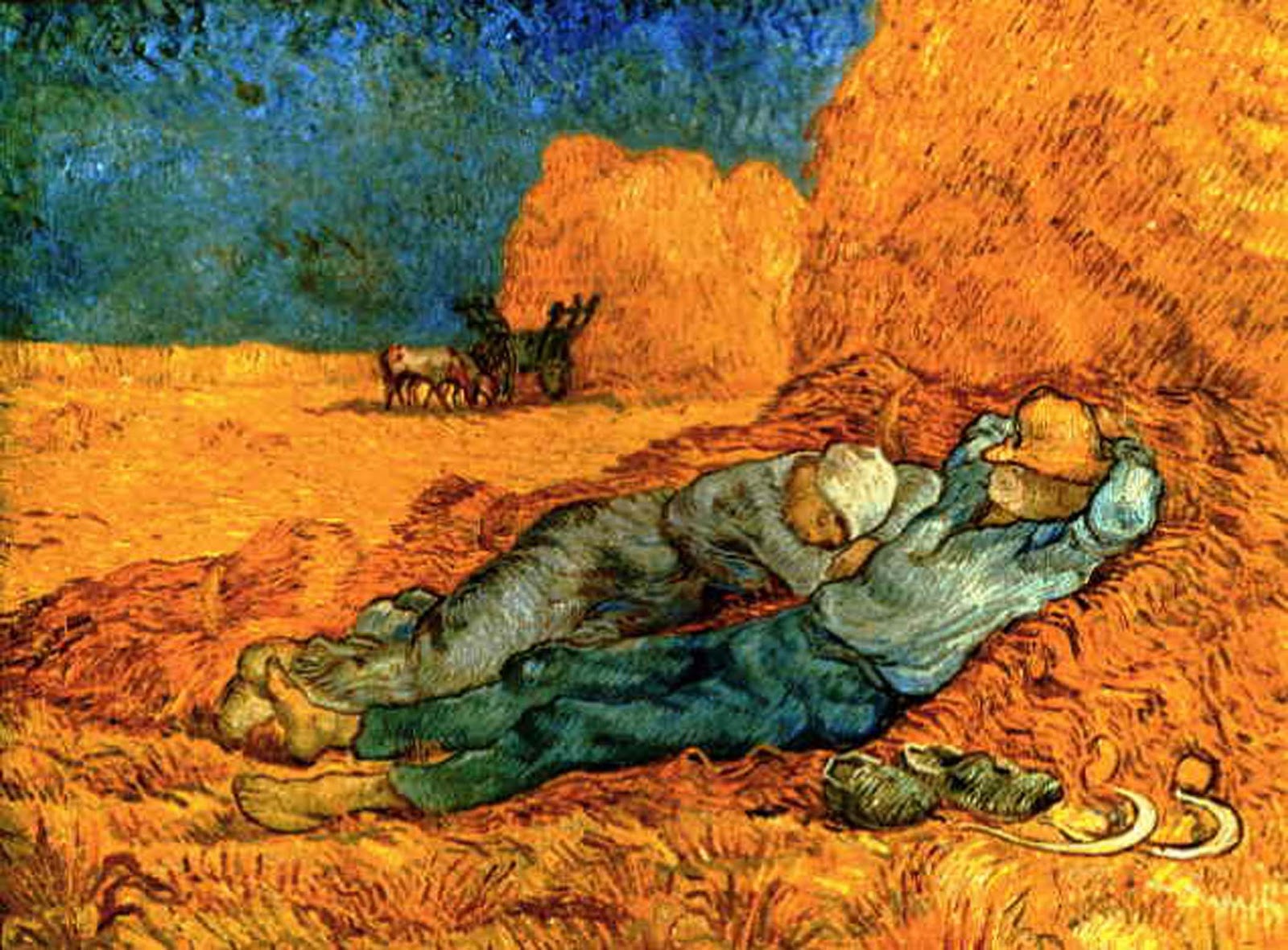
Vincent van Gogh: Noon: Rest from Work (after Millet). 1890.

Saturday, November 10, 2012

So Little, So Much


Truly I tell you, this poor widow has put in more than all those who are contributing to the treasury. For all of them have contributed out of their abundance; but she out of her poverty has put in everything she had, all she had to live on. (Mark12.43-44)

How We Give

The mention of money is all it takes for many Christians to break out in a cold sweat. And they have just cause for feeling squeamish. From the start, the Church has been a lucrative venue for charlatans and scam artists to exploit the faithful’s confidence that God rewards sacrificial giving. The teachings of Christ and the Apostles—which consistently emphasize the virtues of generosity—get twisted into all sorts of outlandish promises that have no basis in scriptural truth. Enormous cathedrals have arisen on the backs of poor people told they can buy their way into heaven. Vast televangelist empires have emerged from a steady flow of donations from people with little to spare. Purveyors of “prosperity gospel”—many of them every bit as criminal as the craftiest Ponzi schemers—point to their mansions and Mercedes and minks as proof positive that God makes people rich. (For the record, it is true that, as 2 Corinthians 9.7 says, “God loves a cheerful giver.” But when we read the statement in context, there’s no escaping its basic premise: God blesses givers so they have more to give. Verse 8: “God is able to provide every blessing in abundance, so that by always having enough of everything, you may share abundantly in every good work.”)

So we are justified in approaching Sunday’s Gospel (Mark 12.38-44) with caution. In this episode, Jesus favorably compares a poor widow who contributes all that she has with wealthier types who make a great show of their gifts—and there’s no mistaking the story is about money. As a result, this text has been a perennial favorite of get-rich-quick preachers and religious rainbow-riders down through the ages. “Be like the widow!” they say. “Give everything you have—even if it’s just a couple of coins, like she did. Jesus says you’ll be better than rich people if you do!” But this passage is about a great deal more than money and status. When we read it carefully, we realize the issue isn’t how much we give at all. It’s how we give. The questions it raises have nothing to do with the amount, but rather where our desire to give comes from.

A Sincere Heart

We don’t know what prompts the widow to give all she has. What’s most intriguing about her is that she comes and goes completely unaware that Jesus notices of her. There’s not a shred of ostentation in her giving, and its size is so insignificant that it’s unlikely to make a real difference. But that’s Jesus’s point: her unconcern about being seen is why He calls her to our attention. Before the widow shows up, Jesus also points out another group—although his assessment of them is hardly flattering. In verses 38-40, He says, “Beware of the scribes, who like to walk around in long robes, and to be greeted with respect in the marketplaces, and have the best seats in the synagogues and places of honor at banquets! They devour widows’ houses and for the sake of appearances say long prayers. They will receive the greater condemnation.”

It is against this background of self-aggrandizing religiosity that Jesus sets the widow in sharp relief. And Jesus makes very clear where both parties’ desire to give comes from. The widow gives from a sincere heart. Her sacrifice is worthy because its extent is not apparent. Meanwhile, the religious leaders’ gifts and piety are unacceptable because they’re offered hypocritically; every act comes with a “what’s in it for me” clause attached. What’s more, Jesus indicates that ill-gotten gains make their impressive contributions possible. “They devour widows’ houses,” He says, referring to their ruthless greed for wealth and status. These people aren’t givers at all. They’re takers. That’s why Jesus says, “This poor widow has put in more than all those who are contributing to the treasury. For all of them have contributed to their abundance; but she out of her poverty has put in everything she had, all she had to live on.” (v43-44) This woman with so little gives so much that her gift is greater than all the others combined. It is she who deserves to be seen—and Jesus makes sure we recognize that.

Presentation Isn’t “Everything”

In terms of our giving—whether of finances, time, or compassion—size really doesn’t matter. Our contributions to God’s kingdom are measured with two criteria: degree of sincerity and unwillingness to exploit the honor of giving for selfish gain. When it comes to generosity of spirit, we quickly discover presentation most definitely isn’t “everything.” Regardless of one’s resources, anyone with sufficient cunning can put on a show. Regardless of one’s spiritual depth, anyone can learn how to recite eloquent prayers and stitch together long-flowing robes of self-righteousness. The instant we design acts of worship to impress onlookers is the instant our hypocrisy is revealed. What’s more, our need to impress often provokes speculation about the source of our largesse. Chances are—like the scribes and so many prosperity preachers—the wealth and status we try to flaunt has been obtained at someone else’s expense. We’re a far cry from blessings that God showers on cheerful givers. If we give with expectations of glory or recognition, we’re not giving at all. We’re taking.

So where does our desire to give come from? When we find that place and align it with Christ’s teaching, we’ll understand the amount and nature of what we give is irrelevant. Humility of gesture is the thing, as we seize every opportunity to give our all, despite how little that may seem in comparison to others. It tickles and amazes me that a poor lady passes through this story with no idea she’ll be remembered centuries later for the significance of her sacrifice. That’s the real lesson in this passage. How we give—not how much or the attention our gifts may receive—determines the true value of our offerings.

It’s not the size of the gift, but the sincerity that prompts our sacrifice.

Saturday, November 3, 2012

Walk With Them


Ruth said, “Do not press me to leave you or turn back from following you! Where you go, I will go; Where you lodge, I will lodge; your people shall be my people, and your God my God.” (Ruth 1.16)

The Compassion Principle

Not long ago I heard an illuminating talk about compassion. The speaker began by breaking down the word’s Latin roots, pointing out that it literally means, “shared suffering.” Then she said the best definition of compassion she’d ever heard came from a Benedictine nun, who told her to be compassionate is to walk beside people in trouble—actively participating in their journey, meeting them where they are, and supporting their efforts to move ahead. Thus, compassion is an intentional work of grace that collapses the distance and differences between those in need and us. It is not sympathy, which attempts to provide solace from a polite remove. Nor is it empathy, which professes to know and understand another’s situation. Compassion surpasses feeling and transpires in the doing. Our sorrow for others means nothing if it stops short of investing our all to alleviate it. Without committing to walk with them in their distress—to make their suffering our own—we’re merely well-wishers, sympathetic viewers from the sidelines.

The more we study God’s Word, the more we mature in our faith, the more convinced we are that compassion is the core Christian value. This belief is inherited from our Jewish forebears, who filled Hebrew scripture with texts extolling compassion as one of God’s defining traits. Numerous times the writers link God’s compassion with divine faithfulness, as we see in Nehemiah 9.17: “You are a forgiving God, gracious and compassionate, slow to anger and abounding in love. Therefore You did not desert them.” Compassion becomes the central theme in Jesus’s message as well, not only in His depiction of God, but also in the expectations He sets for us. Most famously, Jesus marries compassion for others to love for God in the Great Commandment, which we hear in Sunday’s Gospel: “You shall love the Lord your God with all your heart, and with all your soul, and with all your mind, and with all your strength,” followed by, “You shall love your neighbor as yourself.” (Mark 12.30-31) Then, in Galatians 6.2, Paul underscores compassion’s centrality to our faith when he writes, “Bear one another’s burdens, and in this way you will fulfill the law of Christ.” Bearing the burdens of others, sharing in their suffering, walking beside them, meeting them in their need—we cannot misconstrue the compassion principle as a call for kindness that keeps its distance. It is the law of Christ that places very specific demands on our attitudes and behaviors toward one another. Compassion, first and foremost, is an act of obedience.

Relentless

There’s a relentless aspect of compassion that we all too often—and easily—overlook. Compassion is an act of faith we carry out by faith, ignoring conventional wisdom, social mores and taboos, and political expediencies that would advise against walking with others. We see the full extent of compassion in God’s unyielding covenant to love and accept us despite our failures and deficits. But we also observe its relentless nature in dozens of biblical characters who are moved to bear the burdens of people around them. None of these examples is more vivid than Ruth’s. Here is a woman dealing with extraordinary loss, whose future is anything but certain, and who stands to lose everything she treasures if she embraces another’s sufferings as her own. Yet that’s precisely what Ruth does. She’s relentless in her compassion for Naomi, the mother of her recently deceased husband, and commits herself—despite her mother-in-law’s protests—to walk with Naomi, to bear her burdens, and to face life’s uncertainties alongside her.

Ruth’s story is familiar to most of us. Yet we risk undervaluing its gravity by underestimating its complexity. Sunday’s Old Testament text (Ruth 1.1-18) introduces her saga with a detailed background that brings Ruth’s dilemma into sharp focus. Ruth and Orpah are two Moabite women who marry the sons of a Jewish couple who relocate to Moab after famine descends on their home in Bethlehem. Despite ethnic, religious, and cultural differences, both marriages prosper. Then the father-in-law dies, as do both sons, leaving three widows with no viable means of support. With no blood relatives to provide for her, Naomi has no choice but to return to her extended family in Bethlehem. Going home is no guarantee she’ll be accepted. Her sons’ marriages to pagan women casts shadows over her and her return no doubt will give rise to resentments about having to care for a woman who’s not contributed to the family coffers for many years. Ruth and Orpah do have a way out, however. They can return to their families and resume the lives they knew before marriage. It won’t be easy. They too will confront prejudices and disdain for marrying outsiders. But they’ll have a safe home and provisions to ensure they won’t starve.

Reluctantly, Orpah assents to Naomi’s wishes. Ruth refuses. It’s inconceivable to her that Naomi should return to Bethlehem alone. So profound is her compassion that she voluntarily severs family, cultural, and religious ties to walk beside Naomi into a strange world, to live among strangers who despise her, to adopt strange customs, to speak a strange language, to worship a strange God. Ruth has absolutely nothing to gain by bearing Naomi’s burdens. That’s why the compassion conveyed in her resolve takes our breath away. “Do not press me to leave you or turn back from following you!” she insists. “Where you go, I will go; Where you lodge, I will lodge; your people shall be my people, and your God my God. Where you die, I will die—there I will be buried. May the LORD do thus and so to me, and more as well, if even death parts me from you.” (Ruth 1.16-17) There’s no pause to consider what’s “appropriate” or “feasible.” There’s no lengthy hug, followed by a tender fare-thee-well and reminders to “call if you need anything.” Ruth doesn’t promise, “I’ll be there for you.” Ruth is there and refuses to be anywhere but there. Ruth is relentless.

Admonishments and Promises

Stripped of relentlessness, compassion is reduced to sentiment—an affect that has little effect in a harsh world. As believers who seek to reflect God’s nature in all we do and followers of Christ compelled to honor Christ’s commands, we are wise to take Ruth’s example to heart. And that begins by removing the filter of self from our eyes. Especially for American Christians participating in our national elections, this passage comes at a critical time. We cannot of good conscience enter the voting booth alone. We must take those we walk beside with us—those presently struggling with poverty, hunger, homelessness, violence, broken families, and every other form of social neglect. Beyond what may be best for us, we must consider what’s best for them and, if necessary, place their needs above our wants. We must subvert conventional wisdom, social mores and taboos, and political expediencies—many of them endorsed by religious leaders—to demonstrate true compassion in all of its relentless glory.

In Psalm 112.1-5 we read, “Blessed are those who fear the LORD, who find great delight in God’s commands. Their children will be mighty in the land; the generation of the upright will be blessed. Wealth and riches are in their houses, and their righteousness endures forever. Even in darkness light dawns for the upright, for those who are gracious and compassionate and righteous. Good will come to those who are generous and lend freely, who conduct their affairs with justice.” (NIV) May we listen closely to these admonishments and promises, and like Ruth, trust God above all else in our commitment to walk beside those in need.

Compassion goes beyond promising to be there. It is there and refuses to be anywhere but there, walking beside those in need, bearing their burdens, and sharing in their suffering.

Saturday, October 27, 2012

Who's Calling?


Jesus stood still and said, “Call him here.” And they called the blind man, saying to him, “Take heart; get up, He is calling you.” (Mark 10.49)

Gatekeepers

My work frequently requires me to interface with business leaders who appear on the covers of Fortune and Forbes and similar publications. When I first meet them, they’re typically down-to-earth folks—gracious, non-threatening, and remarkably attentive to the task at hand, which, in my case, focuses on preparing them to address their employees. They understand the nature of our engagement and respect my contributions to the process. Actually getting to them is often the most problematic aspect of the job, however. In corporate culture, concentric circles of gatekeepers tightly guard access to high-level executives. Before I can reach them to find out what they really want to say, I have to maneuver through a small army of public relations, legal, sales and marketing, and administrative officers telling me what the boss can or can’t say, how he/she should or shouldn’t say it, and why it must or must not be said. While some of the information is useful, much of it isn't. More often than not, executives tell me, “Forget all that. I just want to talk to the people.”

Repeatedly in the gospels, we find a very similar situation, with the disciples assuming the roles of Jesus’s gatekeepers. For some reason, they believe it’s their duty to screen everyone who seeks Jesus’s attention to make sure they’re worthy of it. They don’t want anyone wasting Jesus’s time or making requests that might lead Him to say or do something He shouldn’t. Like corporate handlers, they do everything they possibly can to shield Jesus from compromising situations. And we should respect their sincerity in doing this. They mean well. Yet, time after time, Jesus overrules them, welcoming the least and the lowest—children, pagans, the sick, injured, and rejected—to approach Him with their needs. What the disciples don’t realize is these people are vital to Jesus. Interacting with them is how He shapes His message of unconditional love and divine grace. Despite the disciples’ precautions, time and again Jesus effectively tells them, “Forget all that. I just want to talk to the people.”

Not Jesus’s Way

In Sunday’s Gospel (Mark 10.46-52), we watch this scenario unfold with startling clarity. Jesus and the disciples are leaving Jericho, trailed by a large crowd, and they pass Bartimaeus, a blind beggar sitting on the roadside. When he hears Who it is, Bartimaeus starts yelling, “Jesus, Son of David, have mercy on me!” The gatekeepers immediately spring into action, ordering the man to settle down. But their caution only stirs him to shout more loudly. Jesus stops and tells His self-appointed handlers, “Call him here.” Perhaps chastened—possibly even moved with compassion for the blind man—they say, “Take heart; get up, He is calling you.” Bartimaeus tosses his cloak aside, scrambles to his feet, and no doubt with some assistance from people he can’t see, makes his way to Jesus. The Lord asks, “What do you want Me to do for you?” Bartimaeus replies, “My teacher, let me see again.” (v51) With that, Jesus tells him, “Go; your faith has made you well.” Bartimaeus’s vision is instantly restored and he joins Jesus’s followers.

The beauty of this episode rests in its particulars. Bartimaeus has two strikes against him: he’s blind and he’s a beggar. To all appearances, he has nothing to offer Jesus. Those who try to silence him assume he’ll never be able to follow Christ. How could he? He can’t see where he’s going. He’s penniless. There’s just no good reason to stop for a person with no sense of direction or any real assets to contribute to this burgeoning movement. He needs to quiet down and keep out of the way. But that’s not Jesus’s way. Jesus stops and calls Bartimaeus to Him. And what is the blind beggar’s response? He throws off his cloak. Everything he owns—his only protection from blazing sun and bitter night—falls away. He finds his way to Jesus and implores Him to open his eyes, addressing Him as, “my teacher.” There is the nugget of faith that makes Bartimaeus whole. He’s asking more of Jesus than healing. He wants to be taught to see the world through fresh eyes. The physical restoration of his eyesight opens his vision to new life that comes from following Christ. All of this is evident to Bartimaeus before he receives his sight. It’s evident to Jesus from the moment the blind beggar cries out to Him. It’s evident to us, as objective onlookers. Who doesn’t get it? The people who take it upon themselves to protect Jesus. This story is as much about their blindness and poverty as the sightless beggar’s.

All We Need to Hear

Bartimaeus’s tale challenges us to consider whom we’re listening to. Will we be left on the wayside because people who presume to know what’s best for Jesus see nothing useful in us? Will we accept their myopic view of us as blind beggars? Or will their attempts to silence us inspire us to cry out more loudly for Jesus’s attention? Christ needs no gatekeepers. And this story assures us we need no one’s approval to reach out to Jesus. If no one else says it, we must tell ourselves, “Take heart; get up, He is calling you.” Once that registers, we can rid ourselves of everything we cling to for safety and security, scramble to our feet, and find our way to Christ. When He asks what we want of Him, we say, “Teacher, open our eyes.” Our faith restores our sight and makes room for us among Christ’s followers.

We don’t need to be concerned about gatekeepers. Jesus says, “Forget all that. I just want to talk to them.” Christ is calling to us. We are vital to His message of unconditional love and grace. Are we listening?

Bartimaeus’s story tells us it’s not about Jesus’s self-appointed gatekeepers. It’s about answering Christ’s call, believing He’ll teach us to see the world through new eyes.